

Short video sharing app development has become one of the most profitable segments in the mobile app economy. Platforms such as TikTok, Instagram Reels, and YouTube Shorts have changed the way users consume content.
Businesses, startups, and media companies are now exploring how to build a short video platform that attracts creators, audiences, and advertisers.
Organizations planning to launch a new platform must understand the short video app development cost, required technology, and the essential short video app features that drive engagement.
This comprehensive guide explains the development process, feature requirements, cost factors, and the role of a reliable short video app development company in delivering scalable applications.
The global short-form video market has experienced explosive growth over the last five years. Recent industry estimates indicate that:
These trends create strong opportunities for businesses offering short video app development services.
Startups can launch niche platforms focused on education, entertainment, regional languages, or commerce-driven video content.
Entertainment apps dominate the short-video ecosystem. These platforms focus on viral content, music-based videos, comedy, dance, and influencer engagement.
High-performance recommendation engines drive user retention by continuously delivering personalized feeds.
Existing social platforms integrate short-video features to increase engagement. Companies launching new social networks often prioritize video-first strategies to capture younger audiences and creators.
Video commerce is growing rapidly. Brands and marketplaces use short videos to showcase products, offer tutorials, and enable instant purchases. Integrated shopping features allow users to buy products directly from videos.
Educational platforms use short videos for micro-learning. Training institutions, enterprises, and coaching platforms publish short lessons that improve learning retention and accessibility.

TikTok is a standalone short-video social platform known for its highly personalized “For You” recommendation algorithm, strong creator ecosystem, and viral content discovery model.
Key Stats
YouTube Shorts is the short-form video feature within YouTube that leverages the platform’s massive global audience and creator monetization ecosystem.
Key Stats
Instagram Reels is Meta’s short-video feature integrated into Instagram’s social network, enabling creators to reach followers and new audiences through algorithmic discovery.
Key Stats
A successful application must include the foundational short video app features that support content creation, discovery, and engagement.
Users must be able to create accounts through email, phone number, or social login. Profile dashboards allow creators to manage followers, uploads, and engagement metrics.
Built-in recording tools enable users to capture content directly within the app. Editing capabilities include trimming, merging clips, speed adjustments, and basic transitions.
Augmented reality filters, visual effects, and licensed music libraries significantly increase user creativity. These features encourage viral content creation and enhance user engagement.
The platform must support fast uploads with background processing and optimized encoding. Users should be able to publish instantly or schedule content.
Engagement tools such as likes, comments, and social sharing help increase platform activity. Real-time notifications inform users about interactions.
A personalized feed shows content based on user behavior, followed creators, and trending videos. Discovery algorithms drive content visibility and growth.
Modern platforms require advanced capabilities to compete in the global market.
Machine learning algorithms analyze user behavior, viewing time, engagement patterns, and interests. These systems deliver personalized feeds that increase retention.
Live streaming allows creators to engage with audiences in real time. Features such as live chat, virtual gifts, and event streaming improve monetization opportunities.
Revenue features include in-app advertising, subscription models, and digital gifting systems. Creators can earn income while the platform generates commission revenue.
Advanced dashboards provide performance insights, including view counts, engagement metrics, revenue data, and audience demographics.
Automated moderation tools detect harmful content using AI models. Reporting systems allow users to flag inappropriate videos. Moderation workflows ensure regulatory compliance.
The development journey begins with competitor analysis, target audience identification, and product positioning. Feature planning and monetization strategies are finalized during this phase.
Design teams create intuitive interfaces that simplify recording, editing, and browsing experiences. User-centric design ensures high retention rates.
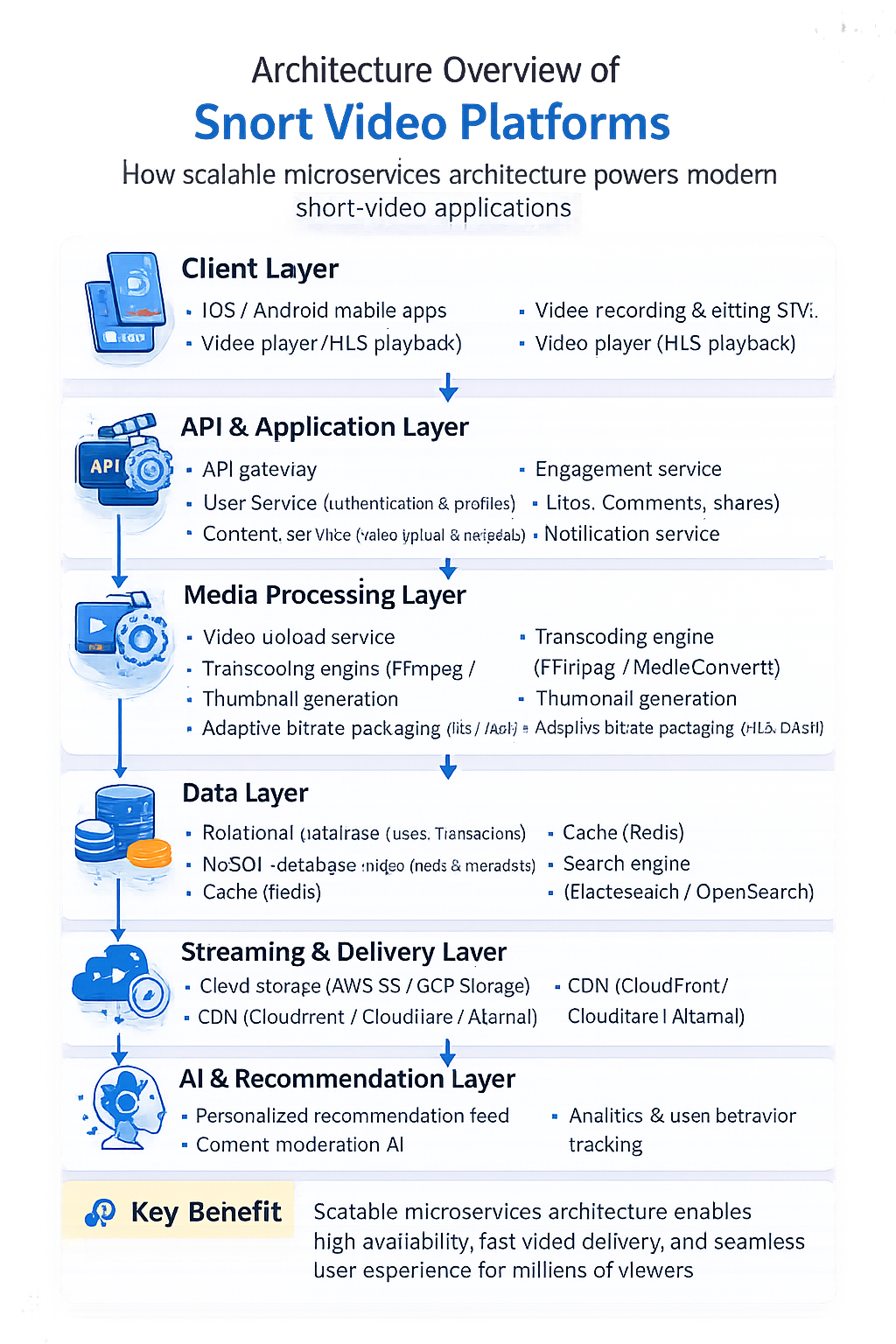
Developers build the application using scalable backend services and optimized mobile interfaces. Real-time communication APIs and media processing modules are integrated.
Streaming infrastructure includes encoding pipelines, cloud storage, and CDN delivery systems. This setup ensures smooth playback across different network conditions.
Extensive functional, performance, and security testing ensures reliability. After deployment, monitoring tools track performance metrics and user behavior.
An MVP version includes core features such as user registration, recording, editing, uploads, and basic feeds.
Estimated Cost: $40,000 – $80,000 depending on complexity and region.
A complete platform with AI recommendations, live streaming, monetization, and analytics requires larger engineering teams.
Estimated Cost: $120,000 – $350,000+ depending on scalability requirements.
Annual maintenance typically ranges from 15%–25% of development cost. Infrastructure expenses increase with user growth due to storage and bandwidth consumption.
The scope and sophistication of features strongly influence development cost. Basic functionality such as uploads and feeds requires less effort, while advanced capabilities like AI recommendations, AR filters, and live streaming significantly increase development time and investment.
Developing separate native applications for iOS and Android requires additional coding, testing, and maintenance. Cross-platform frameworks can reduce initial cost, but performance optimization for video-heavy applications may still require additional engineering work.
Short video apps require high-performance encoding pipelines, cloud storage, and CDN delivery networks. Infrastructure setup, bandwidth consumption, and streaming optimization add substantial cost to both development and operations.
Interactive interfaces, advanced editing tools, animations, and seamless navigation require specialized UI/UX design and frontend development. More sophisticated design requirements increase design hours and overall project cost.
Recommendation engines, behavioral analytics, and personalization algorithms involve machine learning model development and data processing pipelines. These advanced systems increase both development complexity and infrastructure requirements.
Integrating payment gateways, ad networks, music libraries, analytics platforms, and social login services requires additional implementation effort and sometimes licensing costs.
Continuous updates, cloud scaling, performance monitoring, and security implementations such as encryption and moderation tools require ongoing investment, which should be considered in the total development cost.
Understanding these factors helps businesses accurately estimate short video app development cost before initiating development.
Revenue strategies determine long-term sustainability. Popular monetization approaches include:
Platforms can display short video ads within user feeds. Brands pay for impressions, clicks, or engagement, making in-feed advertising one of the most consistent revenue sources for video platforms.
Users can subscribe to their favorite creators for exclusive content, early access to videos, or members-only live streams. The platform typically earns revenue through subscription commissions.
During live streams or video interactions, viewers can send digital gifts or tips to creators. These virtual purchases generate revenue for both the platform and content creators.
Some platforms allow creators or publishers to offer paid premium content such as tutorials, professional courses, or exclusive entertainment videos, enabling additional revenue streams.
Short videos can include affiliate product links that allow creators and platforms to earn commissions when viewers purchase recommended products through embedded shopping links.
Brands collaborate with influencers and creators to publish sponsored content promoting products or services. Platforms can earn revenue through campaign management fees, advertising partnerships, or creator marketplace commissions.
Combining multiple monetization streams increases revenue potential.
Video platforms must comply with global privacy regulations such as GDPR and regional content guidelines. Essential measures include:
Strong security frameworks protect both users and platform reputation.
Selecting the right short video app development company can significantly impact project success. Businesses should evaluate:
A technology partner with domain experience ensures faster time-to-market and better scalability planning.
The demand for short-form video platforms continues to rise globally. Businesses that invest in short video sharing app development can tap into large creator economies and rapidly expanding digital audiences.
However, launching a successful platform requires careful planning, strong architecture, and feature-rich user experiences.
Understanding the required short video app features, development lifecycle, infrastructure needs, and monetization strategies allows companies to make informed investment decisions.
While the short video app development cost varies based on complexity and scale, working with an experienced short video app development company ensures optimized development timelines and scalable solutions.
Organizations planning to build a short video platform should focus on user engagement, intelligent recommendation systems, and flexible monetization tools. With the right strategy and technology partner, businesses can create next-generation video ecosystems that drive long-term growth and revenue.


Jeeto11
The app quickly earned over 1,000 downloads within two months of launch, and users have responded positively. ARKA Softwares boasted experienced resources who were happy to share their knowledge with the internal team.

Archithrones
While the development is ongoing, the client is pleased with the work thus far, which has met expectations. ARKA Softwares puts the needs of the client first, remaining open to feedback on their work. Their team is adaptable, responsive, and hard-working.

Service Provider
I started my project with Arka Softwares because it is a reputed company. And when I started working with them for my project, I found out that they have everything essential for my work. The app is still under development and but quite confident and it will turn out to be the best.